
Blog
Elegant Wedding Menu Cards Styles, Ideas & Practical Guide

Wedding Menu Cards: The Definitive Guide to Menu Card Styles, Design, and Strategy
Introduction
We design wedding menu cards that do more than list food they narrate the bride and groom’s story, enhance the reception’s decor, and guide guests through a memorable dining experience. This guide covers wedding menu card styles, wedding reception menu ideas, menu card layout and format, interactive menu card ideas, and much more, with practical tips for customizing your cards while staying on budget and on theme.

Wedding Menu Cards: The Definitive Guide to Menu Card Styles, Design, and Strategy
1. Understanding the Importance of Wedding Menu Cards
Why menu cards matter. Wedding menu cards act as small ambassadors on every table: they set expectations, reflect the wedding’s tone, and provide essential dietary clarity. Beyond utility, well-designed menu cards become part of the table styling and a keepsake for guests. Key goals: communicate clearly, reflect style, and elevate the dining experience.
How guests read menus. Guests scan for course order, allergens, and options. A clean layout with elegant typography for wedding menus ensures quick comprehension. Think of menu cards as the map for a shared meal: if the map is confusing, the journey is less enjoyable.
Practical checklist. Include course names, dish descriptions (brief and appetizing), dietary icons (vegan, GF), service timing (optional), and a small note about the couple or the menu’s inspiration to add personality.
2. Top Wedding Menu Card Styles: Elegant, Rustic & Minimalist
Elegant wedding menu styles emphasize fine typography, restrained color palettes, and luxury finishes like foil stamping or embossing. These are typically used in formal wedding settings where the menu acts as a refined accessory.
Rustic wedding menu card inspirations feature textured papers, kraft or recycled stock, twine, and botanical prints. Rustic menu card designs for weddings pair beautifully with outdoor barns, farm-to-table receptions, and heritage menus.
Minimalist wedding menu design ideas rely on generous white space, a single accent color, and simple sans-serif typography. Minimalist choices are budget-friendly and modern they’re especially effective when coordinated with the broader stationery suite.
Analogy: Think of menu card style as the outfit the menu wears a tux for a formal wedding, a linen shirt for rustic charm, or clean linen for modern minimalism.
3. Wedding Reception Menu Ideas: Course-by-Course Inspiration
Plan menus to match service style: plated, buffet, family-style, or stations. Wedding reception menu ideas should account for pacing, guest preferences, and service logistics.
Plated menu idea: Starter (seasonal salad), Main (protein + seasonal vegetable), Dessert (light mousse or signature dessert). Keep descriptions short: highlight technique and seasonality.
Station menu idea: Offer themed stations seafood, tapas, and carving stations with clear signage and a small menu card describing highlights. This is ideal for interactive, social receptions.
Special considerations: Offer children’s meals, vegetarian/vegan options, and allergy-friendly dishes as clear separate lines on the menu card. Personalize a signature cocktail description to complement the food narrative.
4. Menu Card Layout and Format: Best Practices
Readability first. Prioritize legibility: 10–12pt body fonts, 14–18pt headings, and clear spacing. Use contrast between text and paper dark ink on light stock is safest.
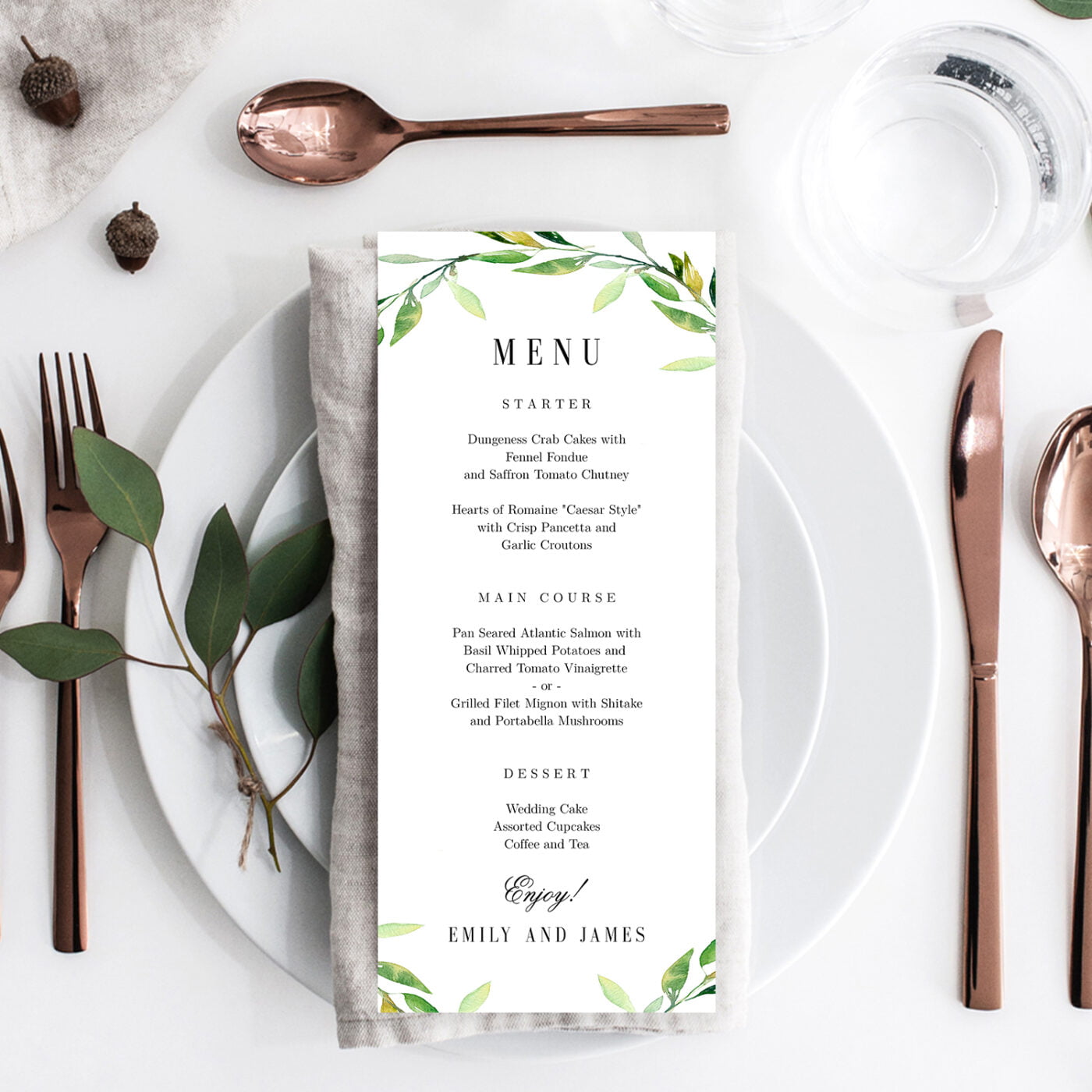
Structure: Title → Course names → Dish names → Brief description → Dietary icons. Keep phrasing concise and sensory: “Pan-seared sea bass citrus beurre blanc, charred baby leeks” feels vivid and professional.
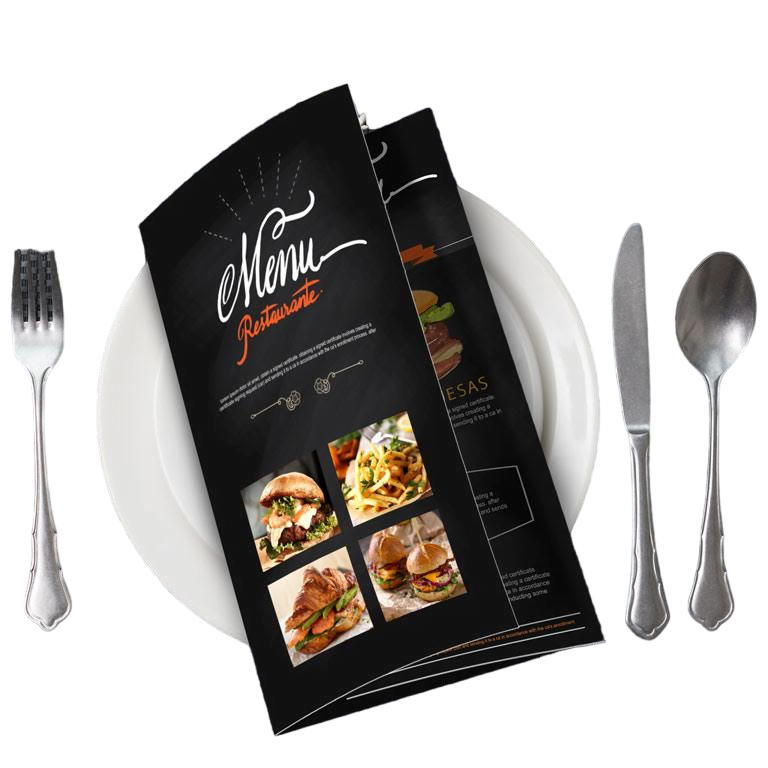
Layout formats: Flat card (single face), folded (booklet or bi-fold), and tent card (tabletop). Choose format to match service: tent cards work for buffet signage, flat cards for place settings, and folded cards for multi-course menus.
Visual hierarchy: Use bold weight for dish names, italics for descriptions, and consistent alignment. Avoid long paragraphs; keep each menu item to one line or a short two-line description.
5. Interactive Menu Card Ideas: QR Codes & Guest Interaction
Digital meets physical. Pair a printed card with a QR code linking to a full digital menu: interactive allergen filters, clickable ingredient lists, or video of the chef explaining dishes. Integrating QR codes with digital menus provides flexibility, last-minute updates, and accessibility.
Guest engagement: Use “choose-your-side” interactive cards at the place setting or a QR poll for guests to vote on a dessert this creates conversation and involvement.
Advantages of electronic menu cards: real-time updates, multimedia, space for stories behind dishes, and accessibility features (larger fonts, read-aloud).
6. Wedding Menu Card Examples That Work
Example 1 Formal plated menu: Heavy cotton paper, gold foil heading, elegant serif type, three-course menu with wine pairing line.
Example 2 Rustic family-style menu: Kraft paper, hand-stamped title, family recipe note, and a small illustration of a family heirloom.
Example 3 Destination wedding menu: Bright, colorful palette, local regional dishes listed with short backstory, and a “recommended pairing” with local wine.
What makes examples work: cohesion with the wedding theme, clarity for the guest, and one unique personalization element such as a story, monogram, or local produce note.
7. DIY Wedding Menu Cards: Step-by-Step
Plan & prototype. Start by choosing format and a template. Sketch the layout: title area, courses, and footer.
Choose materials and printing method. For small runs, digital printing on thick card stock is cost-effective. For upscale DIY, consider letterpress or foil effects through specialty shops.
Assembly tips: Cut edges cleanly using a paper trimmer, align elements with a jig, and batch-apply decorative touches (ribbons, wax seals) on an assembly line to save time.
Quality control: Print a test run and proofread thoroughly for allergens and spelling. Factor in extras for mistakes and keepsakes.
8. DIY Wedding Menu Card Templates: Where to Start
Template sources. Use vector templates from reputable marketplaces or design tools that export print-ready PDFs. Choose templates with CMYK color space and bleed settings prepped.
Customization pointers: Swap fonts, tweak line lengths, and replace placeholders with sensory, short descriptions. Keep two versions: one for plates/place settings and one larger format for buffet signage.
Accessibility: Make a simple, high-contrast version for guests with visual needs.
9. Menu Card Etiquette for Weddings: Wording & Placement
Wording essentials: Use polite phrasing “Main Course” or “Entrées” depending on formality. Avoid internal chef jargon; keep descriptions evocative but concise.
Placement: Place flat menu cards on dinner plates or to the left of place settings. Tent cards should be placed where the buffet or shared platter is easily visible. For plated service, cards on napkins create a polished look.
Dietary etiquette: Discretely mark alternate meals (e.g., “GF”) or use a coded sticker system to avoid singling out special-diet guests at the table.
10. Thematic Wedding Menu Ideas: Match Food to Theme
Vintage wedding menus can include heirloom recipes and classic plating. Beach-themed menus highlight seafood and tropical fruits with nautical graphics. Heritage-themed menu cards incorporate family dishes, regional spices, and bilingual labels where appropriate.
How to execute: Choose a dominant ingredient or dish that anchors the theme, and repeat motifs (color, icons, wording) across stationery and signage for cohesion.
11. Elegant Wedding Menu Styles for Formal Receptions
Formal cues: High-contrast palette, serif fonts, minimal graphics, and luxury stocks such as cotton-rag or laid papers. Consider letterpress wedding menu cards, foil stamping for couple names, and a restrained palette.
Details matter: Include wine pairing lines and timing suggestions. Use understated monograms rather than full illustrations.
12. Flat Menu Card Designs for Weddings
Why choose flat cards: Affordable, easy to print, and highly customizable. They work well as place cards, keepsakes, and envelope inserts.
Design tips: Maintain strong margins, avoid microtype, and emphasize dish names. Flat cards pair well with foil stamping or a matte finish to look elegant on a budget.
13. Folded Wedding Menu Card Ideas: Pros & Cons
Pros: Extra space for storytelling, program notes, and wine pairings. They feel substantial. Cons: Higher printing cost and slower production.
Use cases: Multi-course tasting menus, cultural weddings with translated sections, or menus that include a timeline of events.
14. Tent Card Menus for Wedding Receptions
Best for buffets and stations. Tent cards are self-standing and visible from a distance. Keep headers large, use clear icons for dietary information, and include a short description (one line) to avoid clutter.
Materials: Waterproof or coated stocks are ideal for outdoor receptions to resist spills and humidity.
15. Rustic Menu Card Designs for Country Weddings
Visual elements: Hand-drawn florals, kraft stock, jute ties, seed-paper inserts, and typographic emphasis on warmth and authenticity.
Personal touches: Incorporate family recipes or a short farmer/fisher story to emphasize farm-to-table sourcing.
16. Best Materials for Wedding Menu Cards
Paper types: Cotton rag (luxury), textured linen, recycled kraft (rustic), and coated stocks (modern). Ecofriendly wedding menu paper options include post-consumer recycled content, seed paper that guests can plant, and FSC-certified stocks.
Finishes: Foil stamping, embossing, letterpress impressions, and spot-UV give tactile richness. For outdoor events, consider waterresistant wedding menu cards printed on coated synthetic stocks.
17. Luxury Menu Card Designs & Finishes
Elements of luxury: Thick cotton stocks, edge painting, gilt edges, foil stamping, and custom envelope wraps. Luxury menus often feature calligraphy menu cards for weddings and personalized monograms.
How to prioritize: Invest in one standout finish (e.g., letterpress) rather than multiple small embellishments to avoid visual clutter.
18. Ecofriendly Wedding Menu Card Ideas & Paper Options
Sustainable choices: Recycled paper, soy-based inks, and digital-only menus to reduce waste. Seed paper menus double as favors. Sustainable printing options for wedding menus and ecofriendly menu card options combine aesthetics with responsibility.
Practical tip: Offer a single printed menu per table and provide digital versions for guests who want to keep a copy.
19. Calligraphy Menu Cards for Weddings
Why calligraphy works: It adds a human touch and artisanal quality. Combine calligraphy headings with a readable body font to balance beauty and legibility.
Options: Hire a calligrapher for small batches or use calligraphy-style fonts for larger print runs. For authenticity, hand-lettered menus on kraft paper create a memorable tactile experience.
20. Seasonal Wedding Menu Card Designs & Ingredients
Spring: Light pastels, herb-forward descriptions, and spring vegetables.
Summer: Bright palettes, fruit-forward desserts, and chilled starters.
Fall: Warm tones, roasted root vegetables, and spiced desserts.
Winter: Jewel tones, hearty mains, and rich sauces.
Menu synergy: Use seasonal ingredients in wedding menu design to reinforce freshness and lower costs by sourcing local produce.
21. Budget-friendly Wedding Menu Card Options
Low-cost strategies: Flat single-side printing on midweight stock, digital printing, DIY assembly, and printable templates. Affordable menu card printing options include local print shops and online bulk printers.
Money-saving tip: Order one larger menu card per table for display, instead of one per guest, and offer small printed keepers only for VIPs.
22. Color Palettes & Typography: Choosing Visual Style
Popular wedding color palettes for menu cards often reflect the season: dusty blue and blush for spring, rust and gold for fall, emerald and cream for winter. Color psychology in wedding menu card design helps create mood soft blues calm while warm hues excite.
Typography: Pair a decorative display font with a clean serif or sans-serif for body text to avoid legibility issues. Limit typefaces to two complementary fonts.
23. Personalized Menu Card Designs & Couples’ Stories
Incorporate story: A short line “Inspired by our grandmother’s stew” or “The couple’s favorite honeymoon dish” adds intimacy. Creative ways to personalize wedding menus include portraits, timeline snippets, and small maps for destination weddings.
Personalization mechanics: Use a subtle footer or a pull-out card to avoid overloading the main menu content.
24. Cultural & Heritage-inspired Wedding Menu Designs
Cultural wedding menu design should respect traditions: bilingual text, local script fonts, or decorative motifs tied to heritage. Ethnic cuisine in wedding menus can be highlighted with brief descriptions describing origin and significance.
Examples: South Asian weddings can include a small note describing regional spices; Mediterranean menus may call out family recipes and pairings.
25. Designing Menu Cards for Outdoor Weddings
Durability first: Use coated or synthetic papers for moisture resistance. Consider lamination or weatherproof finishes. Visual considerations: Choose high-contrast palettes and larger type so wind and sunlight don’t compromise readability.
Set-up tips: Use weighted stands for tent cards and protect tabletop menus with clear sleeves.
26. Digital & Hybrid Menu Cards: Benefits & Setup
Digital menu cards benefits: Instant updates, accessibility features, and lower waste. Link via QR codes on printed cards or napkins. Best practices for digital menu display: mobile-first layouts, clear categories, and searchable allergen filters for ease.
User experience digital menus: Ensure quick load times, legible fonts, and offline-friendly fallbacks for spotty reception.
27. Printing Options: Traditional vs Digital
Traditional: Letterpress, foil, and embossing offer tactile richness but higher costs. Digital printing is cost-effective, fast, and flexible. Decision framework: Use traditional methods for focal pieces (head table menus) and digital for bulk printing.
Glossy vs matte finish for menu cards: Matte reduces glare and looks sophisticated; glossy can enhance vibrant colors but may feel less formal.
28. Costing, Budgeting & Hidden Menu Card Expenses
Consider: Proofing fees, setup charges, die-cutting, delivery, and assembly labor. Average price of wedding menu cards varies widely simple digital prints could be under $1 each; luxury letterpress can be $10–$25+ per card.
Budget tip: Create a full stationery budget line and ask printers for a complete quote including setup and shipping.
29. How Menu Cards Enhance Guest Experience
Menu cards set expectation and reduce decision friction. Clear descriptions reduce confusion, discreetly mark dietary meals, and create conversation starters. A menu that tells a story enriches the meal it’s part of the sensory choreography of the reception.
Measure success: Guest feedback, fewer service questions, and Instagram photos of beautiful menu designs indicate high engagement.
30. Trends & Timeless Standards in Wedding Menu Design
Current trends: Mixed material cards, interactive QR-enhanced menus, and eco-conscious materials. Timeless standards: legibility, consistent branding, and high-quality paper for tactile satisfaction.
Looking ahead: Expect hybrid solutions combining printed keepsakes with digital depth menus that are both physical souvenirs and portals to multimedia storytelling.
Conclusion
Wedding menu cards are practical assets and emotional artifacts they guide guests through a meal while reinforcing the wedding’s visual and cultural story. From DIY wedding menu cards to luxury menu card designs, from interactive menu card ideas to ecofriendly wedding menu options, this guide offers the core decisions, practical tips, and inspiration needed to craft memorable menus that balance aesthetics, readability, and budget.
FAQs
1. How should we word menu cards for a multi-course plated dinner?
Use clear headings for each course, bold the dish name, and follow with a concise sensory description (one line). Include dietary icons and, optionally, a wine pairing line.
2. Are digital menu cards a good idea for weddings?
Yes. Digital menus (accessed via QR codes) allow last-minute edits, accessibility options, and multimedia storytelling. Always provide at least one printed menu per table for keepsake and ease.
3. What is the most cost-effective menu card format?
Flat, single-sided digital prints on midweight stock are the most affordable. Ordering one menu per table and offering a digital copy for individuals saves cost.
4. How can we make menu cards ecofriendly?
Choose recycled or seed paper, limit per-guest printing (one per table), use soy-based inks, or opt for fully digital menus.
5. What is the best paper type for luxury menu cards?
100% cotton rag or textured linen stocks with letterpress, foil stamping, or edge painting provide a premium tactile feel.